Introduction: The Pulse of Modernity at Your Fingertips
When you flip a light switch at dusk, that simple gesture connects you to one of humanity's most remarkable engineering achievements. Behind the instantaneous illumination lies an intricate global network of industrial facilities performing precise energy conversions. Electricity—the lifeblood of modern society—emerges not from simple physical reactions but through a sophisticated interplay of thermodynamics, electromagnetism, and cutting-edge engineering. This technological marvel represents the pinnacle of human ingenuity since the Industrial Revolution.
Chapter 1: Power Plant Architecture – The Nexus of Energy Conversion
Power plants serve as humanity's fortresses for harnessing natural forces, functioning primarily as energy conversion hubs. Their core technology revolves around generators—precision rotating machines that transform mechanical energy into three-phase alternating current. Based on Faraday's law of electromagnetic induction, relative motion between magnetic fields and conductors efficiently generates electricity for immediate integration into national grids. While the principle appears straightforward, the engineering demands are extraordinarily rigorous. Diverse power sources—whether steam pressure, flowing water, or wind—must ultimately translate into consistent rotor rotation to induce stable electrical currents.
Chapter 2: Energy Sources and Conversion Pathways – A Diverse Energy Landscape
Power generation systems are primarily classified by their energy sources, reflecting both technological evolution and historical context:
Thermal Power: The cornerstone of industrial civilization. By combusting fossil fuels or utilizing nuclear fission, these plants generate immense heat to produce high-pressure steam that drives turbines. Bound by the second law of thermodynamics, thermal plants inevitably waste heat energy. Modern combined heat and power (CHP) systems push efficiency boundaries by repurposing waste heat for district heating or industrial processes, achieving unprecedented energy utilization rates.
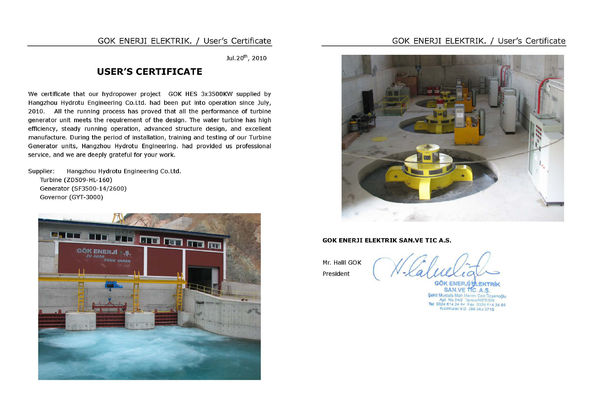
Renewable Generation: Vanguards of decarbonization. Solar panels convert photons directly into electrons, wind turbines transform aerodynamics into mechanical torque, and hydroelectric systems harness water's kinetic energy. These technologies not only diversify energy portfolios but redefine humanity's relationship with nature.
Energy Storage: The grid's temporal architects. Pumped hydro, flywheels, and large-scale battery systems address renewable energy's intermittency by storing surplus power during low demand and releasing it during peaks—granting grids unprecedented flexibility.
Chapter 3: Grid Orchestration – The Art of Precision Engineering
Power plants serve dual roles as both energy producers and grid stabilizers. Strategic plant categorization ensures system reliability:
Baseload Plants: Nuclear and large coal facilities operate continuously, forming the grid's foundation.
Peaking Plants: Rapid-response units that activate during demand surges.
Load-Following Plants: Dynamically adjust output to match real-time consumption.
Plant operations constitute high-stakes engineering. Control rooms monitor thousands of parameters—from temperatures to vibrations—while synchronizing generator startups with grid requirements. Each connection represents a delicate balancing act of voltage and frequency stability.
Chapter 4: Historical Evolution and Future Horizons
From Zénobe Gramme's 1871 commercial generator to Edison's 1882 public power stations, electrification has accelerated human progress. Today's transition toward diversified, intelligent, low-carbon systems continues this legacy of innovation.
The future envisions power plants evolving from standalone facilities into interconnected network nodes. Artificial intelligence will enable millisecond-level demand forecasting, while hydrogen and fusion technologies promise solutions to energy scarcity. These advancements will transform power stations into smart cities' vital organs—continuously energizing civilization's advancement.
The simple act of illumination represents countless engineers' dedication. As we navigate energy transitions, we're not merely upgrading technology—we're redefining humanity's future.


 Your message must be between 20-3,000 characters!
 English